Best Vegetables for Homemade Dog Food
Homemade dog food can include vegetables that add fiber, vitamins, minerals, and variety to your dog’s meals. Choosing suitable vegetables can improve the nutritional value of homemade recipes while helping keep meals safe and enjoyable for your dog.
From carrots and pumpkin to green beans and sweet potatoes, many vegetables can be useful additions to a dog’s homemade diet. However, each vegetable has different nutritional qualities, and proper preparation and portion size are important for safe feeding.
In this guide, discover the best vegetables for homemade dog food, how to prepare them safely, and which vegetables to avoid.
What Are the Best Vegetables for Homemade Dog Food?
Vegetables can add fiber, vitamins, minerals, moisture, and variety to homemade dog food. The best choices depend on your dog’s needs, the rest of the recipe, and how each vegetable is prepared.
Fiber-Rich and Digestive-Friendly Choices
Pumpkin
Plain pumpkin provides fiber and moisture and can be a useful ingredient in homemade dog food. Use cooked, unseasoned pumpkin and avoid pie filling or products containing added sugar and spices.
Green Beans
Green beans provide fiber and are relatively low in calories, making them a useful addition to many homemade meals. Serve them plain, cooked, and cut into bite-sized pieces.
Carrots
Carrots provide fiber and useful nutrients while adding a naturally crunchy texture. For homemade dog food, cooked or finely chopped carrots are easier to incorporate and serve safely.
Peas
Peas provide fiber, protein, and several nutrients, making them a convenient addition to homemade recipes. Use plain cooked peas and avoid canned varieties with added salt or seasonings.
Zucchini
Zucchini is a water-rich, relatively low-calorie vegetable that can add moisture and variety to homemade meals. Serve it plain, cooked or finely chopped, without oils or seasoning.
Nutrient-Dense Vegetables
Spinach
Spinach contains several vitamins and minerals, but it should be used thoughtfully rather than as the main vegetable. Small amounts of plain cooked spinach can add nutritional variety.
Kale
Kale contains fiber and various vitamins and minerals, making it a nutrient-dense vegetable option. Use small amounts of plain, properly prepared kale as part of a varied homemade diet.
Broccoli
Broccoli provides fiber and several vitamins and minerals. Small portions can be included in homemade dog food, but large amounts may cause digestive upset in some dogs.
Bell Peppers
Bell peppers provide vitamins and antioxidants while adding color and variety to homemade meals. Remove the stem and seeds, then serve plain pieces that are appropriately sized.
Brussels Sprouts
Brussels sprouts contain fiber, vitamins, and other plant nutrients. They can be served cooked and plain in small portions, since larger amounts may cause gas or digestive discomfort.
Starchy Vegetables
Sweet Potatoes
Sweet potatoes provide carbohydrates, fiber, and several vitamins and minerals. Always cook them thoroughly, remove the skin if needed, and serve them plain without butter, salt, or seasoning.
Yams
Yams can provide carbohydrates, fiber, and nutrients when properly cooked. Use plain, fully cooked yam flesh and avoid recipes containing sugar, butter, spices, or other added ingredients.
Butternut Squash
Butternut squash provides fiber and nutrients while adding moisture and texture to homemade meals. Remove the seeds and tough skin, then cook the flesh thoroughly before serving.
Beets
Beets contain fiber and several nutrients and can add variety to homemade dog food. Serve them plain and cooked in small portions, while monitoring your dog for digestive changes.
Light and Hydrating Vegetables
Cucumber
Cucumber contains a high amount of water and can add freshness and moisture to a homemade meal. Serve plain, remove large seeds when appropriate, and cut it into manageable pieces.
Celery
Celery provides water and some fiber while adding a crunchy vegetable option. Chop it into small pieces and serve it plain, as long fibrous pieces can be difficult for some dogs to chew.
Lettuce
Plain lettuce contains water and some fiber, making it a light vegetable option for homemade dog food. Chop it finely and serve moderate amounts without dressing, salt, or other toppings.
Cauliflower
Cauliflower provides fiber and several nutrients while adding variety to homemade meals. Cook it plain and serve small portions, since larger amounts may contribute to gas in some dogs.
How Vegetables Benefit Homemade Dog Food
Vegetables can improve the variety and nutritional value of homemade dog food when they are used in appropriate amounts. They provide fiber, vitamins, minerals, and other plant nutrients without replacing essential ingredients in a balanced recipe.
Fiber and Digestive Health
Many vegetables provide dietary fiber, which can support normal bowel function and healthy digestion. Fiber also adds bulk to meals, but too much can cause gas, loose stools, or other digestive discomfort.
Vitamins, Minerals, and Antioxidants
Vegetables can contribute vitamins, minerals, and antioxidant compounds to homemade meals. Different vegetables provide different nutrients, so using a varied selection can add nutritional diversity to the overall diet.
Adding Nutrients Without Excess Calories
Many vegetables contain relatively few calories compared with energy-dense ingredients. Including suitable portions can add volume, moisture, and nutrients to a meal without substantially increasing its calorie content.
Supporting Healthy Weight Management
Vegetables may help create satisfying meal volume while keeping calories controlled when they are used appropriately. However, weight management depends on the complete diet, portion sizes, activity, and the individual dog’s needs.
Related Articles
- How Much Homemade Dog Food to Feed a Dog
- Cheap Homemade Dog Food Recipes on a Budget
- Homemade Dog Food Without Chicken Recipe
- High Protein Homemade Dog Food Recipe Guide
How Much Vegetables Should You Add to Homemade Dog Food?
The right amount of vegetables depends on your dog’s size, age, activity level, health needs, and the rest of the recipe. Vegetables should complement the main ingredients rather than replace essential sources of protein, fat, vitamins, and minerals.
Which Vegetables Should Dogs Avoid?
Not every vegetable is suitable for dogs. Some can be toxic, while others may cause digestive problems or become unsafe when prepared with seasonings. Knowing which ingredients to leave out is an important part of preparing homemade dog food safely.
Onions, Garlic, and Chives
Onions, garlic, and chives belong to the Allium family and should not be included in homemade dog food. They can be harmful to dogs, including when eaten in cooked, raw, dried, or powdered forms.
Wild or Unknown Mushrooms
Wild or unidentified mushrooms should never be added to homemade dog food because some varieties can contain harmful toxins. It is safest to avoid unknown mushrooms rather than trying to determine whether they are edible.
Can Vegetables Be Part of a Balanced Homemade Dog Food Diet?
Yes, suitable vegetables can be part of homemade dog food, but they are only one component of the overall diet. A homemade recipe needs the right balance of essential nutrients, and vegetables cannot provide everything a dog requires.
Why Vegetables Alone Are Not a Complete Diet?
Vegetables provide useful fiber and plant nutrients, but they do not supply all the protein, essential fats, vitamins, and minerals dogs need. A homemade diet should therefore include appropriate ingredients in nutritionally balanced proportions.
Bottom Line
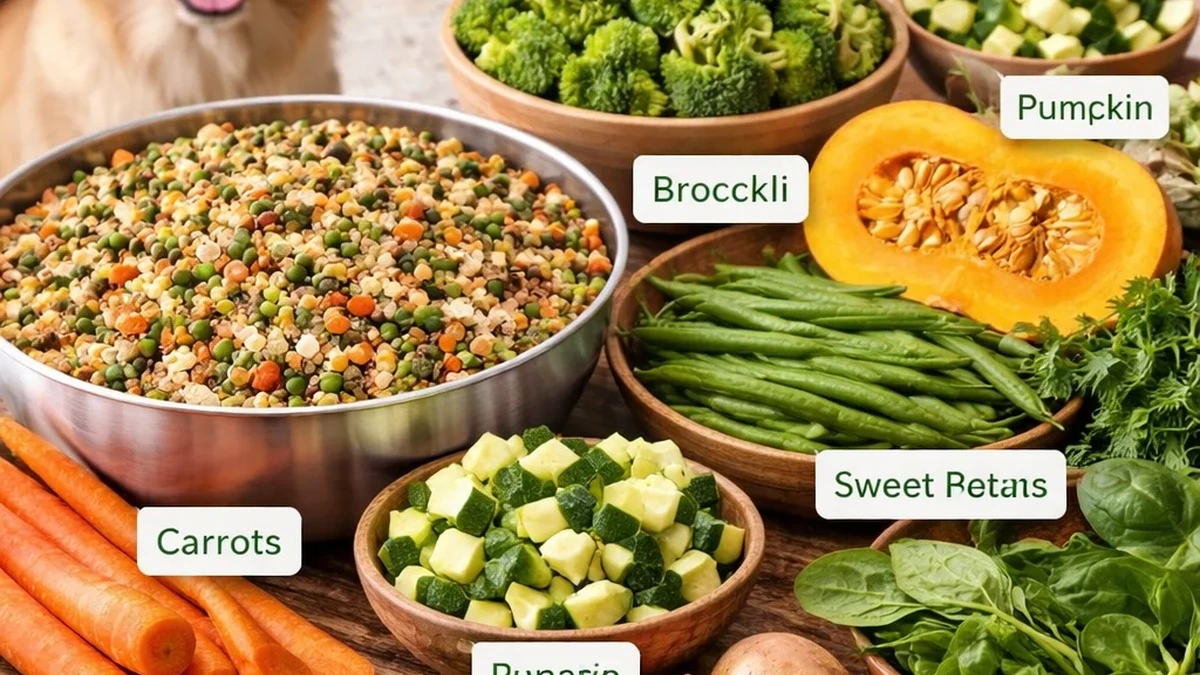
Choosing the best vegetables for homemade dog food can add useful fiber, vitamins, minerals, moisture, and variety to your dog’s meals. Options such as carrots, pumpkin, green beans, sweet potatoes, zucchini, and broccoli can fit into suitable recipes when prepared plainly and served in appropriate amounts.
Homemade dog food vegetables should complement, not replace, the other nutrients your dog needs for a balanced diet. Choose healthy vegetables for dogs, avoid unsafe ingredients such as onions and garlic, and consider your dog’s individual needs when deciding which vegetables to include and how much to serve.
FAQ’s About Vegetables for Homemade Dog Food
1. What Are the Best Vegetables to Mix With Meat for Homemade Dog Food?
Answer: Carrots, green beans, pumpkin, zucchini, and other suitable vegetables can pair well with meat in homemade dog food. The best combination depends on the complete recipe and your dog’s individual nutritional needs.
2. Can Dogs Eat Raw Vegetables in Homemade Food?
Answer: Some vegetables can be eaten raw, but cooking can make certain vegetables softer and easier for dogs to chew and digest. Always remove unsafe parts and avoid seasonings, oils, salt, and sauces.
3. Can Dogs Eat Vegetables Every Day?
Answer: Dogs can have suitable vegetables regularly when they are included in appropriate amounts as part of a balanced diet. The type and quantity should fit the dog’s overall nutritional requirements rather than replacing essential ingredients.
4. What Raw Vegetables Can Dogs Eat?
Answer: Dogs can eat some vegetables raw, including carrots, cucumbers, bell peppers, zucchini, and celery when properly washed and cut into safe, bite-sized pieces. Avoid seasoning, and consider your dog’s ability to chew and digest raw foods.
5. What Vegetables Are Commonly Used in Commercial Dog Food?
Answer: Commercial dog foods may contain vegetables such as peas, carrots, potatoes, sweet potatoes, spinach, pumpkin, green beans, and beet pulp. The exact ingredients vary by recipe, brand, and nutritional formulation.